


"Instead of firefighting and major repairs"
While our previous articles reported on the practical and proven methods used in practice - which are applied by almost every car developer and manufacturer worldwide - in the following, we mostly talk about the future: we recommend professionals to also use the diagnostic tool proven during vehicle design and prototype testing, vibration analysis, when servicing vehicles.
Vehicle maintenance generally consists of a series of operations performed after a specified mileage or at regular intervals - as prescribed by the manufacturer. Maintenance operations are compiled based on several years of service experience to predict and eliminate foreseeable faults. This method is about defense against assumed faults, and its disadvantage is that it does not include an assessment of the current technical condition of the vehicle. Some failures of vehicle structures occur randomly, but not entirely without warning signs. Therefore, one or more methods are needed to predict the occurrence of failures - even before complete breakdown - in advance.
Reliability Inspection
Measuring the reliability of vehicles is necessary so that we can drive without any operational disruptions. We can introduce a concept that has been well-known in rotating machinery testing but less familiar in the case of vehicles: reliability inspection, which aims to predict the expected failures of the vehicle and provide the probability of their occurrence. Vibration measurement mainly allows for assessing the current condition of the mechanical units of the vehicle. By regularly checking the vibration levels of the vehicle structures, it is possible to determine their wear (deterioration) trend and thus their reliability, ultimately indicating the timing for repairs. Let's look at a practical example! In most vehicles, the gearbox only deteriorates after a very high mileage. However, it is a common occurrence that a single bearing fails. In today's maintenance systems, this is usually noticed only when the bearing has already disintegrated. By this time, however, there are damages in the gearbox that justify replacing the entire unit.
So what is the solution?
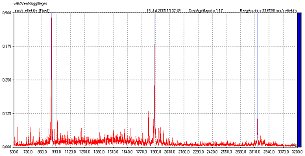
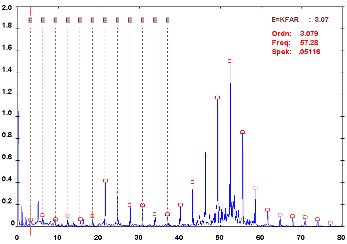
What options does a service center have to "see into" the gearbox, for example, during routine service? Without the right tools, this is not possible. In the past, there was the so-called 2nd service institution, where, after a certain mileage, the gearbox was disassembled, whether it was necessary or not, to uncover any potential faults. Some faults could be detected using this method, but often unnecessary disassembly led to later failures. The solution is vibration diagnostic testing of the gearbox, which allows determining the condition of gearbox bearings and gears without disassembly. It is advisable to perform measurements regularly, aligned with maintenance periods. By comparing the measurement results from time to time, the trend of deterioration (e.g., wear) of the units can be determined. This way, the need to replace a bearing or gear can be identified before the entire gearbox breaks down. Similarly, many components of the vehicle can be examined, which essentially amounts to the reliability inspection of the mechanical parts of the vehicle.
Handheld Instruments for Workshops
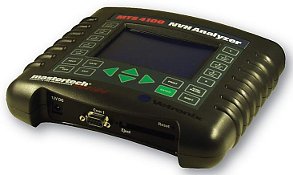
During the production of vehicles, great attention is paid to eliminating noises and vibrations. An NVH (Noise Vibration and Harshness) abbreviation is widespread, which stands for noise, vibration, and harshness. While the method aimed at improving these during the development and production of vehicles is almost daily, service practices do not follow suit. In the United States, where neither the cars nor the roads are worse, the significance of this has been recognized, and diagnostic vibration and noise measuring instruments are being developed for auto mechanics. An example is the MTS 4100 vibration and noise measuring handheld instrument (NVH Analyzer) presented below.
The MTS 4100 equipment is designed for vehicle repair workshops and provides great assistance in pinpointing and eliminating noises, vibrations, oscillations, and "growls" in vehicles. With the directed microphone and accelerometers accompanying the handheld instrument, the sources of faults can be easily identified. The equipment is suitable for balancing half-shafts and propeller shafts in their installed state. The measurement results can be saved and replayed, either immediately after the measurement or at a later time. The device communicates with the vehicle's electronic control via the OBD (On Board Diagnosis) connector. Thus, it "knows" the engine and wheel speeds and, relative to their rotational frequencies, indicates the presumed locations of excessive vibrations in certain structures of the vehicle.
The basic functions of the instrument are as follows:
Location of Measurements in Maintenance
New cars In the case of factory customer services, the result of the above-mentioned reliability and condition assessment is manifested in a radical decrease in warranty costs, alongside the increasing satisfaction of car operators. Owners and operators can trust to a greater extent that the car examined in the service centers will be reliable, meaning it will not unexpectedly let them down. Used cars If the car maintenance is carried out in a service center where the mentioned inspections can be performed, the vehicle will remain reliable, meaning it will not suddenly malfunction. This is especially true if the owner does not switch service centers after the warranty period expires, or if they go to a service center where the above-mentioned inspections can be regularly conducted, and the continuity of the inspections is maintained. The primary goal of our article is to draw the attention of domestic car service centers. Even if due to limited financial resources the mentioned equipment cannot be obtained, it is definitely worth acquiring at least a simpler vibration meter for all car service centers, which are available for around 150,000 forints. Among other things, with the help of such instruments, the necessary experience can be quickly gathered to ensure that cars operate with greater reliability thanks to repairs based on vibration-based condition monitoring.
Elek Péter, Rahne Eric (PIM Ltd.) pim-kft.hu, gepszakerto.hu
The content of the publication is protected by copyright, and its (even partial) use, electronic or printed republication is only permitted with the indication of the source and the author's name, as well as with the author's prior written permission. Infringement of copyright (Copyright) will result in legal consequences.
Copyright © PIM Professzionális Ipari Méréstechnika Kft.
2026 | Minden jog fenntartva
Impresszum | Adatkezelés