


The unity of diagnostic services, equipment sales, and education
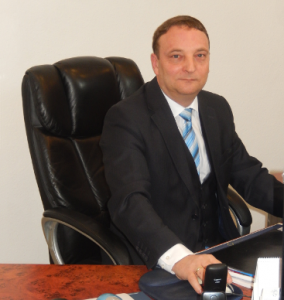
The foundation of the knowledge base of PIM Professional Industrial Measurement Technology Ltd. began in the 1980s, with the roots of vibration diagnostics dating back to the early 1990s. Shortly thereafter, the other pillar of the professional portfolio, thermography, also found solid ground. We recently spoke with the founder-owner of the company celebrating its 20th anniversary, Eric Rahne, a machine vibration diagnostician, thermographer, and forensic expert.>> What was the professional motivation that led a young man who grew up in the GDR, then studied at a Hungarian university through a student exchange program, and finally settled here, to establish an industrial measurement technology company? How did PIM's career begin? Starting from elementary school, I was primarily interested in natural sciences, and the emphasis on logic and critical thinking by the excellent teachers at the Dessau elementary school and later at the Halle high school greatly facilitated the development of this interest. This perspective is highly valuable in industrial diagnostics when drawing the right conclusions regarding a machine malfunction requires knowledge from multiple scientific fields, primarily from the realms of measurement technology and mechanical engineering. Hungary provided an excellent environment in the early 1990s for the spread of vibration diagnostics, which assesses the condition of machines based on measured vibrations and brought tangible benefits, as the demand was evident. At that time, tools from Western manufacturers were already available, allowing for the assembly of complete and complex solutions.
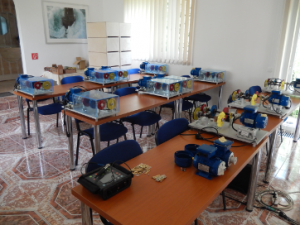
After completing the instrumentation program at the Faculty of Electrical Engineering at the Budapest University of Technology and Economics, I had the opportunity to contribute to the introduction of modern industrial measurements as a representative of German manufacturers: the use of transient recorders, super-fast multi-channel measuring instruments integrated with computers, and real-time spectrum analysis were considered unique in Hungary at that time. In 1997, the scope expanded to thermography, involving the detection of various problems and sources of errors through thermal image evaluations, and I was entrusted with the highest-level representation of thermal cameras from Jenoptik, a famous company within the Carl Zeiss group. This is when I realized my actual dream by organizing independent professional work, free from company constraints, within the framework of what was then a limited liability company, PIM. The family business initially meant a side job for me in the first three years, but it soon became clear that the continuously expanding workload of the successful company provided full-time employment. Furthermore, our increasing significant projects and growing team of experts demanded a more "serious" corporate structure, leading to the establishment of PIM Professional Industrial Measurement Technology Ltd. in 2004 based on the foundation of the previous limited liability company. >> What were the key milestones that characterized the development up to the present day? What were the milestones in the success story of PIM Ltd. – judging by the results, we can confidently say? PIM has always been characterized by continuous professional development, and although there were undoubtedly outstanding moments in the company's history, the fact that two decades later we are financially stable, capable of pre-financing projects worth several hundred thousand euros, providing security for our 3-4 employees, is due to the consistent adherence to our principles, not sudden leaps. If I were to highlight some important moments from the company's history, in addition to the establishment of the Ltd., the initiation of machine diagnostic and thermography professional training at the turn of the millennium must be mentioned. To date, we have passed on our knowledge to nearly two thousand students through these courses. Another important milestone is the commercial product we have been offering since 2002 – the vibration diagnostic training pad developed by us, now in its fifth generation. Initially intended for our own training purposes, we have sold over sixty units internationally, offering a slimmer, lighter (from 50 kg to 23 kg), yet more capable device with CE certification. In recent years, we also operate four independently developed professional websites. >> How is the current product and service offering of PIM structured? Approximately one-third of our activities consist of services, equipment sales, and education. We represent complementary companies, so, for example, the need for a sensor to operate a vibration meter is not an issue. As a system integrator, if we identify gaps in the product range, components that are missing from the represented companies' portfolios, we develop them ourselves. From the beginning of our company, we have always been guided by the fact that we are not traders, not running a webshop, but an engineering team, whose work is defined by two fundamental principles. Firstly, we provide expert services exclusively in areas where we cover these fields with state-of-the-art products. To this end, we have our own instrument park worth approximately 250 million Hungarian forints capable of performing complex tasks. The reverse is also true: for diagnostic products that we deliver to customers, we offer an extensive service package. When a customer purchases equipment from PIM, we provide practical selection advice, promote only solutions that have proven successful for us, and prepare Hungarian manuals, PC and device software translations for the product to ensure the appropriate quality. The greatest advantage is that we share our own professional experience for using the equipment, not just for operation but also support the complete diagnostic activities with theoretical and practical background. >> What is the founder most proud of on the 20th anniversary of the company? It is a significant achievement that after two decades, we have managed to maintain our independence. We are not dependent on any of the companies we represent, have never had bank loans, and have not even utilized grant support.
Thanks to our continuous professional development, despite our small company size, we are among the top five highest-ranked players in vibration diagnostics in Hungary today, and we are even further ahead in the field of thermography. It is also a great achievement that our developments have consistently turned into marketable products, not only in the case of the aforementioned vibration diagnostic test bench, but also in the delivery of our vibration meter/data collector named VibMinder/VibMinderPro to dozens of foreign and over forty Hungarian orders.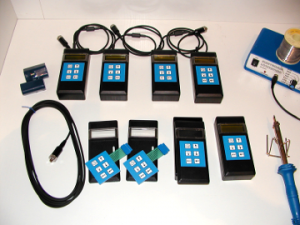
One of the works we can be particularly proud of took place in the most critical area of the Paks Nuclear Power Plant, in the primary circuit. We were entrusted with developing a bolt tightening solution for the flanges of the large pumps operating here, which was flawless from a sealing perspective, yet consumed less time than before. Previously, 10 cm diameter bolts were tightened individually, and the tightening extent was measured by mechanical gauges indicating elongation. We replaced the original multi-step process with simultaneous hydraulic tightening and parallel re-measurement of multiple fasteners. The simultaneous re-measurement with a measuring head with 1-micrometer accuracy on multiple bolts at once grew out of our own idea, with the sensor, digitalization, communication, and software being our own developments, with only the industrial PC being a commercial component in the system. Previously, tightening all bolts on one pump required a full shift, with our method, the assembly steps of up to two pumps can be completed per shift, guaranteed error-free. Thanks to our development, the process is fully documented, and operators receive automatic measurement protocols including a time diagram for each bolt.
>> What do you see as the key to the future development of the company? To maintain our position in thermography and advance in vibration diagnostics, expansion with young, capable, and appropriately inclined colleagues could contribute. Unfortunately, this is not a simple task due to the varying professional backgrounds of graduates, the current level of education, and the characteristics adopted from the United States (questionable). Every year, we engage in instrument development and inventory expansion, which are also essential for the future. Additionally, we aim to make significant progress in two less-focused professional areas in the coming times: sound analysis and vibration measurements. >> How do you envision the future of data collection, data processing in industrial measurement technology, and its connection to big data, Industry 4.0, IoT, and the sustainability issues frequently mentioned nowadays? Regarding the future of the field, I believe that not many technological innovations are born under the umbrella of Industry 4.0; current developments rather summarize existing knowledge. For example, our decentralized data acquisition systems are far from new; we could have always referred to them as cloud-based, but this term was not known a few years ago. We were already dealing with wireless data acquisition ten years ago, but at that time, we did not have the appropriate technology; now this is resolved. In my opinion, there is no need to collect data unnecessarily, thus avoiding big data issues. Only the moments of important events need to be recorded. We must learn to manage our resources, storing information rather than vast amounts of data. Smart information is needed instead of big data. Undoubtedly, technically expert diagnostics greatly contribute to sustainability. It allows maintenance only when necessary and only what is needed. But not too late, as delays can have serious consequences. Intelligent maintenance is particularly environmentally friendly. Less and smaller costly parts and less environmentally harmful lubricants are needed for less frequent repairs, and timely troubleshooting reduces scrap production. Comprehensive efficiency also includes the recent audit of the PIM Ltd.'s quality management system, which, since 2004, is operated based on the new MSZ EN ISO 9001:2015, expanded with the MSZ EN ISO 14001:2015 environmental management system.
Services 61 thousand unique thermographic recordings 300 thermography expertises 144 thousand unique machine diagnostic measurements 2000 machine diagnostic expertises 3000 on-site dynamic balancing 2000 laser shaft alignment 100 laser machine geometry measurement Product Sales 359 vibration meters/analyzers 174 radiometric thermal cameras 5600 sensors/transmitters/transceivers 94 laser machine alignment tools 212 panel instruments (display/regulator) 1400 installed measuring channels Professional Activities 116 professional articles published in trade magazines 45 professional articles published online 4 comprehensive, independent professional websites 17 types of professional training courses with 611 pages of study material 146 conducted professional training courses with 1854 participants 36 presentations at professional conferences Other Indicators 12 thousand unique quotations 6000 unique business deals 6500 Hungarian clients HUF 2.5 billion net revenue Author: Judit Virágh (ManufacturingTrend)
The content of the publication is protected by copyright, and its (even partial) use, electronic or printed re-publication is only permitted with the indication of the source and the author's name, and with the author's prior written permission. Violation of copyright (Copyright) will result in legal consequences.
Copyright © PIM Professzionális Ipari Méréstechnika Kft.
2026 | Minden jog fenntartva
Impresszum | Adatkezelés