


"Accurate temperature measurement or spectacular visualization?"
In thermal imaging measurements, instead of correct results, we often get at most embellished graphical representations, or even worse, inaccurate measurement data. This can quickly make what seemed cheaper turn out to be quite expensive.
It happens that certain thermal cameras offer seemingly identical technologies with correct measurement procedures, but end users lacking the appropriate knowledge remain unaware of the actual measurement capabilities of the given thermal camera. Among the methods that improve image quality achievable with a thermal camera, specifically enhancing measurement detail, in the first part we presented two software-based - and often technically questionable - procedures. In this continuation, after introducing a hardware-based method that can also be problematic at times, we examine the difference between quality-enhancing and merely "enhancing" display procedures. Hardware resolution enhancement with microscan method Based on what has been discussed so far, the fourfold increase in pixel count of the sensor matrix built into matrix thermal cameras can reliably be achieved only through hardware means. This involves changing the position of the radiation beam projected onto the sensor matrix within the thermal camera by micro-movements of the sensor or by horizontal and vertical optical deflection of the incoming radiation - within the thermal camera. This way, radiation projected onto the empty space between originally adjacent elementary sensors (pixels) is also detected, making it usable for image formation. Meanwhile, the thermal camera's geometric resolution always increases by 33 percent (without exception). Since this method does not rely on our hand tremors, it can naturally be applied even with a tripod-mounted thermal camera.
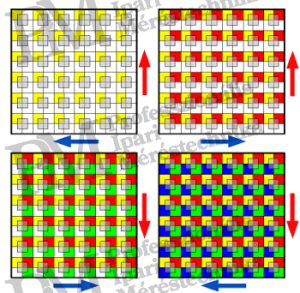
Although the microscan method cannot be considered particularly fast (it takes 0.5-1 s to capture a high-resolution thermal image), it is currently the only method available to create real pixel, extra-large thermal images with maximum geometric resolution. Thermal cameras with such capabilities include the Jenoptik VarioCAM device families, which feature the described optional function called Resolution Enhancement. With VarioCAM hr cameras equipped with a 640×480 pixel detector in microscan mode, 1.23 million pixel images can be captured, while with VarioCAM HD cameras equipped with a 1024×768 pixel detector, 3.15 million pixel images - exclusively containing real measurement data - can be produced. This allows for conducting highly detailed measurements on very large object surfaces without the need for any subsequent thermal image stitching or other interventions.
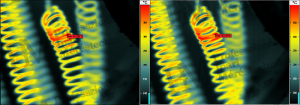
In summary, interpolation does not improve the thermal camera's pixel resolution (or geometric resolution) in terms of measurement data; instead, it distorts the thermal image data content. While hand tremor-based resolution enhancement would be good, the likelihood of successfully aligning the necessary four compatible shots is very low. The only correct method for increasing thermal image pixel resolution is the microscan-based approach, which ensures a fourfold pixel resolution increase on a tripod and simultaneously guarantees a 33 percent improvement in geometric resolution. When handheld, it is also more likely to achieve the desired result compared to the "hand-tremor" method without micro-scan. Focusing, Depth of Field Unfortunately, misconceptions not only revolve around pixel and geometric resolution but also concerning the content and sharpness (focusing and depth of field) of thermal images. It is a professional mistake to claim that the sharpness or accuracy of a thermal image can be improved using visual images. However, a thermal image consists of temperature data derived per pixel, not a visually enhanced image. Let's not forget that we are talking about a measurement procedure aimed at the most accurate temperature measurement of objects under examination! This is not the place for colorful artistic creations. It is well known that the depth of field of thermal cameras is very small, significantly smaller than what is customary in photography. This is because the detectors used in thermography (relatively insensitive compared to photography) require a large amount of energy to achieve the necessary measurement accuracy (thermal resolution). This, in turn, necessitates large aperture and lens diameters, leading to a decrease in depth of field. The magnitude of this problem is easily noticeable. The slightest focusing inaccuracy results in an unusably blurry thermal image, which could even have a significant measurement error. Incorrect focusing causes only a part of the radiation corresponding to a point to fall on the affected sensor surface, with the rest being projected onto its surroundings. This leads to a displayed value lower than the actual local temperature maximum in the case of local temperature maximum, and higher in the case of local temperature minimum. The worse the focusing, the greater the deviation from the real value.
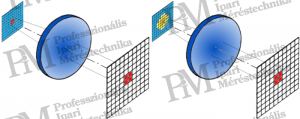
The image on the right side of Figure 3 shows that with poor focusing, only a part of the incoming radiation falls on the correct imaging surface of the sensor matrix, while the rest of the radiation hits its surroundings. Therefore, with incorrect focus adjustment, thermal cameras always display less extreme minimum/maximum temperatures than those present on the object surface in reality. This error can reach up to 20-30 percent. Appearance is not everything Thermal camera manufacturers strive to offer various solutions to improve the quality of thermal images. However, most of these solutions are only capable of enhancing the appearance - not making the measurement data more accurate.In the first part of the article, it has already been shown that interpolation is not able to compensate for missing geometric resolution. Interpolation is also not suitable for correcting poor focus. However, many other methods are also unable to do this, despite the fact that the thermal camera manufacturers and distributors advocating them promote the idea that using them can create more accurate or sharper thermal images.
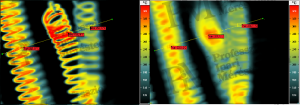
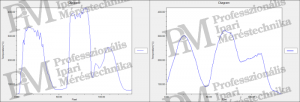
It is worth examining what the widespread and popular composite display (thermal image projected onto a photograph) is capable of as a "correction procedure." Since this method does not generate more measurement data or improve the optical imaging of the perceived thermal radiation on the detector, even though we create spectacular thermal images, their measurement information content and accuracy do not improve. Composite representation (whatever we call it, whether it's picture-in-picture, fusion, or any other commercial fancy name) is just a visual enhancement tool that does not improve the measurement capability of our thermal camera, and the data will not be more accurate. Often, it has the opposite effect because due to the projection, any possible measurement/setting errors will not be noticeable enough, and thus the inaccurate measurement and its consequences will not be apparent.
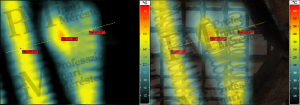
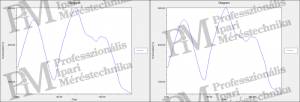
Unique procedures? Primarily, companies that have not really evolved from the world of thermal imaging cameras (but, for example, from military infrared reconnaissance and targeting) advertise on the market with claims that they are able to improve the quality of thermal images with new and unique procedures. Among their claims is that their methods enable more accurate measurements, sharper and more analyzable thermal images can be created while reducing the loss of temperature information. However, a professional review of the advertised methods often reveals that these statements are misleading. A good example of such unfounded claims is FLIR's latest MSX technology. Rahne Eric (PIM Ltd.) pim-kft.hu, termokamera.hu
The content of the publication is protected by copyright, and its (even partial) use, electronic or printed re-publication, is only permitted with the indication of the source and the author's name, as well as the author's prior written permission. Violation of copyright (Copyright) will have legal consequences.
Copyright © PIM Professzionális Ipari Méréstechnika Kft.
2026 | Minden jog fenntartva
Impresszum | Adatkezelés